Arlein dyn ni’n casglu casglu casglu – felly paid a bod yn unig

Thema fi ar hyn o bryd yw “casglu”.

Casglu’r pethau bychain.

Mae nwdls yn casglu fideos gyda fideobobdydd.

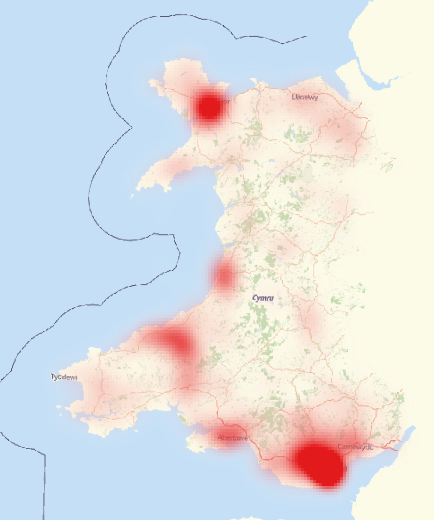
Dw i’n casglu defnyddwyr Cymraeg ar Twitter ar fy cofrestrau. (Tua 609 person heddiw.)

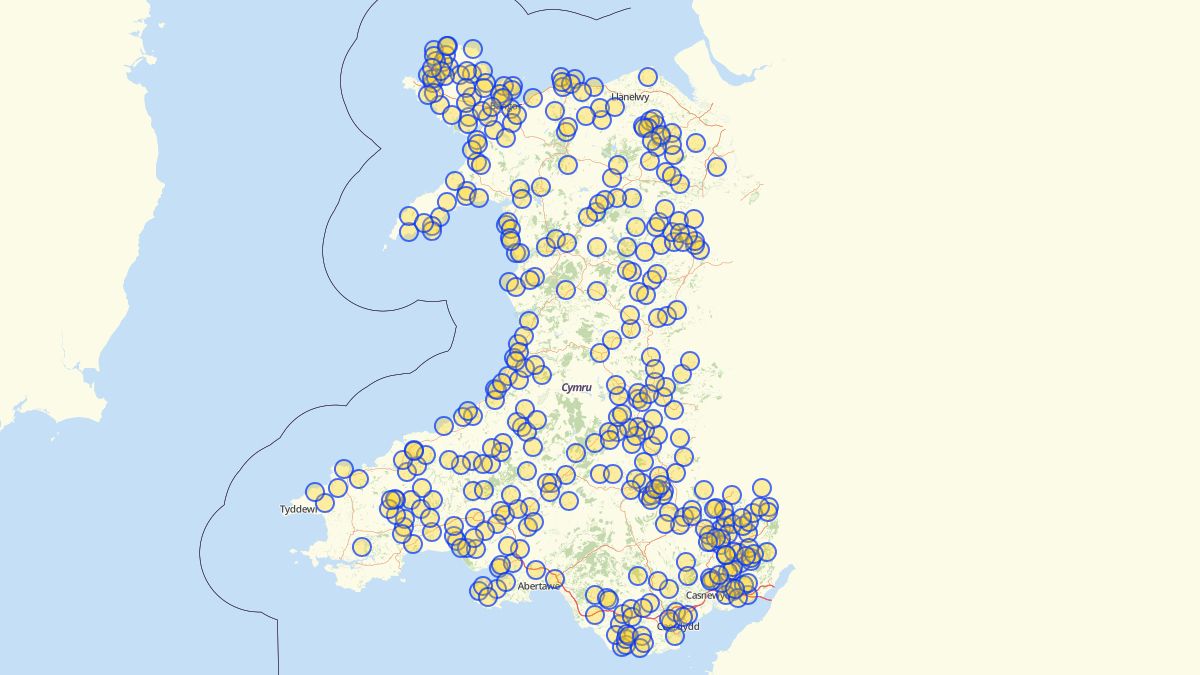
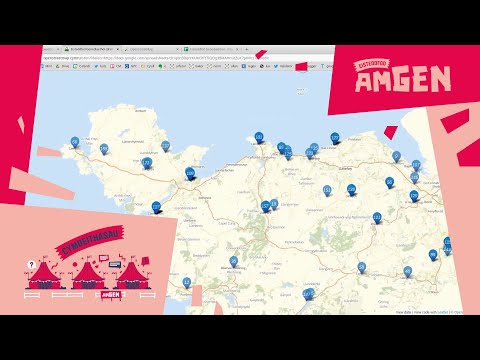
Dyn ni’n casglu gwefannau, blogiau a theclynnau ar Hedyn.

Dyn ni’n casglu pobol a dealltwriaeth gyda Hacio’r Iaith – arlein ac yn y cigfyd.

Ro’n i’n hoffi Blogiadur. Dyn ni’n gallu deall pam casglodd Aran Jones blogiau gwahanol yna. (Ond mae’r wefan angen diweddariad gyda blogiau newydd.) Darllena’r papur “The Blogiadur – a community of Welsh-language bloggers” gan Daniel Cunliffe – dw i’n methu ffendio’r dolen heddiw.

Dyn ni eisiau ffeindio pobol a gwefannau sy’n bodoli yn barod a’u thynnu nhw at eu gilydd i fod mwy agos. Paid a bod yn unigrwydd. Ymuna’r parti!

Cydgrynhoad yw gair da arall.

Dw i’n gofyn am wasanaeth newydd i gasglu canlyniadau Cymraeg ar Google gyda’u gilydd. Gweler post diwetha (wrth gwrs bu farw’r Wenhwyseg achos caeth siaradwyr eu gwasgaru).

Mae’r we Gymraeg yn rhy frith.

Pwy sy eisiau ymuno’r Gymdeithas Yn Erbyn Entropi?

entropi

Llun gan ario_

YCHWANEGOL: Mae Rhys Wynne wedi postio dolen “The Blogiadur – a community of Welsh-language bloggers” yn y sylwadau isod. Cyfrannodd Courtenay Honeycutt i’r papur hefyd.

Chwilio Google, sillafu ac awgrymiadau awtomatig yn y Gymraeg (cyfle?)

Siomedig eto!

Ro’n i eisiau darllen rhywbeth am Wenhwyseg.

Wnes i trio “gwenhwysig” (dim ond 3 canlyniad Google). Hmm…

Ar ôl ychydig o waith, wnes i ffeindio’r sillafiad cywir “gwenhwyseg” (775 canlyniad Google).

Y “Wenhwyseg” hefyd. (3240 canlyniad Google)

Mae awgrymiadau awtomatig yn ddefnyddiol iawn yn Saesneg. Ond os ti’n chwilio am “Estury English” (sic), mae fe’n gallu deall dy air a trwsio dy gamsillafiad.

Dw i ddim yn sôn am yr eiriau yma yn enwedig. Dw i’n trio dychmygu’r we gorau am y Gymraeg. Dyn ni ddim wedi cyrraedd eto.

Mae Cysill yn gallu trwsio’r camsillafiadau. Ond faint o bobol/plant/dysgwyr fasai’n defnyddio fe cyn chwilio?

Dyw Google ddim yn adnabod geiriau Cymraeg. Dyw e ddim yn deall camsillafiadau. Dyw e ddim yn deall treigladau. Dyma pham dw i’n siomedig achos dw i eisiau teclynnau gwell.

Felly mae gyda fi awgrymiad agored am broject nesaf i’r dynion a benywod Cysill (neu unrhyw un)!

Does dim peiriant chwilio sy’n “deall” Cymraeg ar gael. Felly dw i’n eisiau Google + Cysill (neu rhywbeth debyg). Dw i eisiau defnyddio cragen Cymraeg ar Google. Mae’n bosib gyda Google Search API.

Does dim ots gyda fi os mae Google yn cynnig rhyngwyneb Cymraeg. OK da iawn mae rhyngwynebau yn neis ond mae lot mwy yn bosib na rhyngwynebau .

Dychmyga’r cyfle: cynulleidfa mawr am hysbysebion ayyb. Efallai dyn ni’n siarad am y brif wefan Cymraeg.

(Gyda llaw, eisiau gwrando ar enghraifft o Wenhwyseg? 0 canlyniad YouTube o gwbl.)

Fideo Bob Dydd – 730 darn o cynnwys arlein Cymraeg o leiaf bob blwyddyn

Mae’n braf iawn i weld fideobobdydd.com (da iawn nwdls).

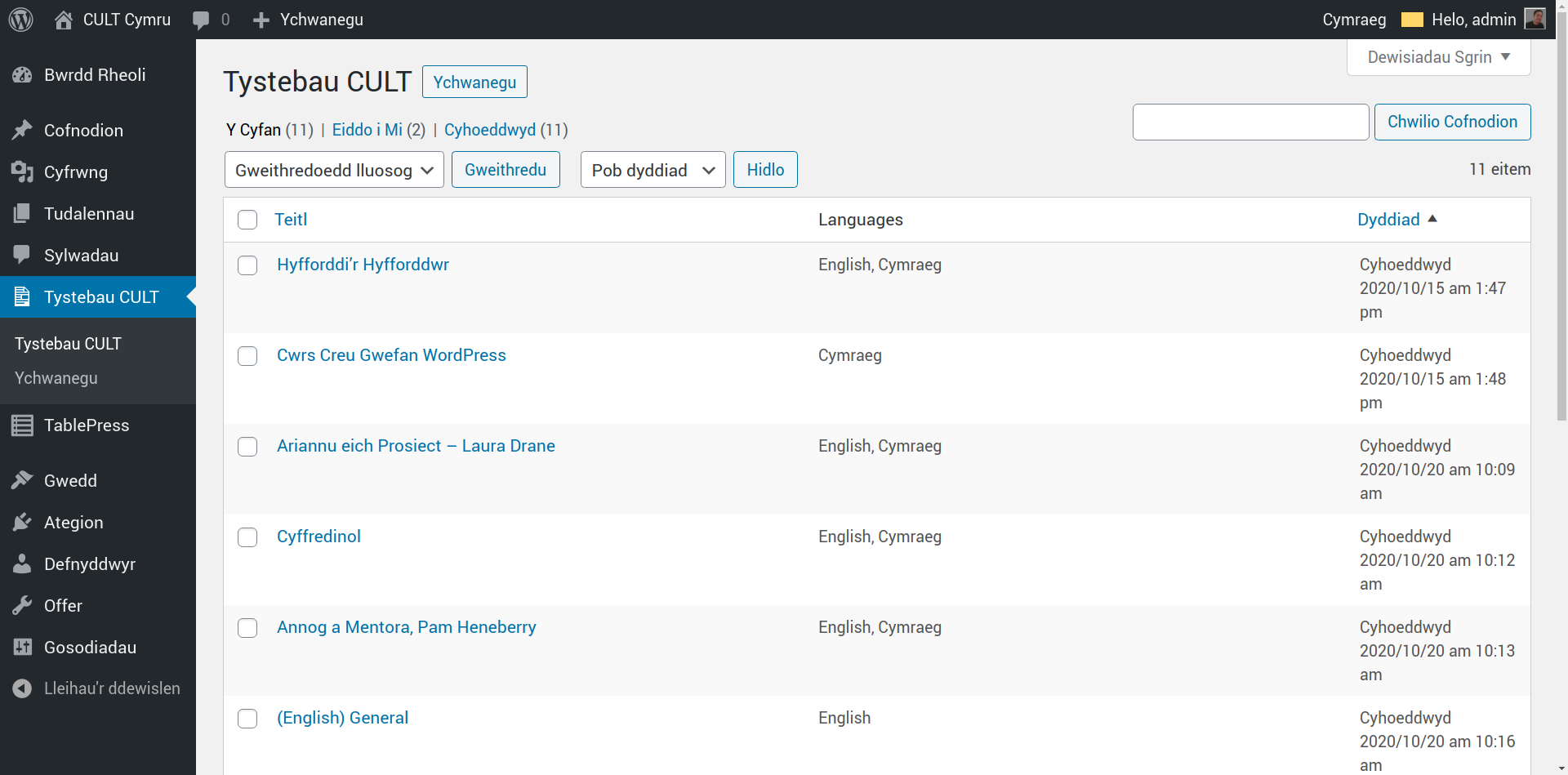
Mae’n enghraifft da o wefan WordPress wrth gwrs. Dyn ni’n gallu ychwanegu e i’r cofrestr WordPress.

Dw i’n meddwl llawer am y diffyg cynnwys arlein Cymraeg. Nawr mae fideobobdydd yn cyfrannu cofnod a thweet bob dydd. Dyna 365 cofnod a 365 tweet awtomatig o leiaf bob blwyddyn! Fideos ardderchog hefyd, dyma’r pwynt.

Mae’n tyfu’r rhwydwaith hefyd achos mae’n hybu fideos YouTube ar gael yn Gymraeg. Weithiau mae’n ddigon i gasglu cynnwys (a chynulleidfa/cymuned). Dolenni yw cynnwys hefyd. Mae’n annog crewyr fideos.

Dyn ni’n gallu annog hefyd gydag ein sylwadau.

(Ychwanegol am gynnwys arlein Cymraeg: dw i dal yn siomedig am Y Cofnod am yr un rhesymau.)

Martin Gardner, enw mawr yn y byd mathemateg chwareus

Bu farw Martin Gardner nos Sadwrn. Oedd e’n enw mawr yn y byd mathemateg chwareus.

Cofnod go iawn cyn bo hir.

Papur academaidd am theori ddiwylliannol a Sleeveface – o Frasil

Neithiwr, ffeindiais i bapur academaidd arlein am Sleeveface gyda’r enw Sleeveface.com: re-significações do vinil na cibercultura.

Mae awdur Simone Pereira de Sá (o’r Universidade Federal Fluminense, Brasil) yn siarad am theori ddiwylliannol, fformatau cerddoriaeth gorfforol a chyfryngau. Mae’n edrych yn ddiddorol iawn ond dw i ddim yn gallu deall Portiwgaleg felly dw i’n defnyddio Google Translate am y tro.

Sgwennais i gofnod ar Sleeveface.com gyda’r manylion eraill. Rhaid i bob cofnod ar Sleeveface.com cael llun o Sleeveface. Mae e’n rheol. Tro yma, wnes i ddefnyddio hen lun o’r archif gyda Paul McCartney. Roedden ni’n bwriadu defnyddio fe yn y llyfr Sleeveface. Ond doedd dim digon o le yn y llyfr am y llun. Dw i’n hoffi’r llun achos mae camera yn y llaw a Macca yw’r artist gwreiddiol wnes i sleevefaco ym Muffalo Bar, Caerdydd yn 2007.

Pam dylai’r Cynulliad Cymru cyhoeddi’r Cofnod dwyieithog? Y cyd-destun technoleg

Mae Daniel Cunliffe yn cywir iawn i sôn am Google Translate, y cofnod Cynulliad Cymru a’r Adolygiad o Wasanaethau Dwyieithog.

Dw i wedi darllen yr adroddiad wreiddiol wythnos yma (ar gael yn Cymraeg a Saesneg. Mae ymatebion dda eraill yn bodoli ond dw i eisiau dilyn Daniel a siarad am technoleg yn enwedig. Mae gormod o bwyslais ar “technoleg dychmygus” yn yr adroddiad (heb diffiniad glir, gyda llaw) a stori BBC gyda Dafydd Elis-Thomas hefyd.

Mae’r Arglwydd Dafydd Elis-Thomas AC, Llywydd y Cynulliad a chadeirydd y comisiwn, wedi dweud bod y panel wedi “ceisio barn mor eang â phosibl.”

“Un o brif amcanion y Trydydd Cynulliad yw sicrhau bod mwy o bobl yn cymryd rhan yn y broses ddemocrataidd yma yng Nghymru.

“Dyna pam ein bod yn falch o ddilyn argymhellion y panel, yn arbennig ei gynnig ynghylch sicrhau bod cofnodion o Drafodion y Cynulliad yn haws eu defnyddio, a hynny drwy ddefnyddio technoleg fodern mewn ffordd fwy dyfeisgar.”

Yn cyffredinol, mae’n amhosib dweud beth fydd yn digwydd gyda dy ffynonellau data arlein (e.e. testun neu unrhyw cynnwys arall). Mae data yn mwy gwerthfawr pan mae pobol yn gallu ail-defnyddio fe – os maen nhw yn defnyddio data cyfanred efallai gyda ffynonellau eraill yn enwedig.
Dylet ti meddwl am:

Wyt ti erioed wedi postio unrhyw beth arlein a wedyn welaist ti rywbeth hollol newydd yn digwydd gyda fe? Mae’n digwydd trwy’r amser.

Felly mae technoleg a dychymyg yn well gyda dychymyg pobol eraill – newyddiadurwyr, ymchwilwyr, pobol, cwmnïau ayyb mewn ffyrdd diddorol iddyn nhw. Rhowch data da arlein, gwelwch beth fydd yn digwydd.

Paid rhoi ffocws ar “technoleg fodern mewn ffordd fwy dyfeisgar” heb manylion penodol achos mae’n bron diystyr. Mae’n well i rhoi’r data llawn arlein gyda fformatau agored cyntaf (e.e. XML). Dyna beth dyn ni’n gwybod yn barod. Mae pobol yn gallu adeiladu teclynnau eu hun.

Dyn ni wedi colli’r gwerth llawn os dyn ni’n stopio’r cyfieithiad Cymraeg. Mae gwerth yn bodoli nawr, wythnos nesaf ac yn y dyfodol.

Paid anghofio: iaith yw technoleg.

YCHWANEGOL 1: Dw i wedi postio sylw ar cofnod Guto Dafydd am yr un pwnc hefyd.

YCHWANEGOL 2: Mae Syniadau yn sôn am y problem chwilio (Google ayyb).

In conversation with dubstep don Pinch (Kruger music interview)

Below is a fairly early interview with dubstep DJ, producer and label owner Pinch, which I originally wrote for Kruger magazine in 2006.

I was chatting about the still emerging dubstep genre with Mike Williams the magazine’s editor in some Cardiff bar. We decided to do an interview with Rob Ellis alias Pinch.

I’d originally met Rob in December 2004 at Moloko club, Mill Lane in Cardiff. He’d travelled from Bristol to my Machine Meadow night (which I ran with Lee Underpass) in order to catch Kode9 playing dubplates of grime and dubstep.

Rob mentioned he was a dubstep enthusiast who made his own tunes – so far so typical for a random guy in a club.

By July 2006 and this interview, Pinch had just recently released his first 12″ for Planet Mu and a handful of things on his own labels. He’d toured a bit but at the time it still wasn’t at all inevitable he’d be the dubstep scene stalwart he is today. The accompanying photo in the magazine, taken by Michaeljohn Day, showed Pinch grappling with a stack of ringing telephones which turned out to be very fitting.

“There was a factory somewhere in the States where workers were complaining about seeing ghosts – not just feeling them but actually seeing them.” says Pinch.

“They sent some people to investigate and eventually found that the cooling system was emitting a low frequency of 19 hertz. They turned it off and it was fine… You see, around 19 hertz is the resonant frequency of your eyeballs. It makes your eyeballs vibrate. It affects the way they deal with the information in front of you. Everything’s got a resonant frequency.”

Pinch could fill several magazines with weird and chilling tales about sound. As a devotee and champion of what’s become known as DUBSTEP – arguably the first bona fide new musical movement to emerge from the UK in a while – his fascination with bass and its spooky Fortean properties long ago become an obsession.

As any likeminded follower of bass-driven music may know, dubstep as a genre has been bubbling away contentedly for some time now. Sounding like some lazier, hazier cousin of the grime scene, with roots in the 2-step garage sound, the common factors in any dubstep tune are a large and seductive cushion of bass with sparse yet swinging drum rhythms. Unlike grime, it is mainly instrumental and there are few MCs to speak of. Melodies and vocal snatches appear, often quite subtly, then vanish. But always the bass.

Pinch is our guide to this new and thrilling world. He recalls the initial confusion: “a lot of people listen to it and think it’s two kicks, a snare and a hi-hat – ‘what else is going on?’ (they say)… But there’s all this 40 hertz sub-bass which is moving and gives it a groove but it just won’t pick up on your hi-fi so you won’t even know it’s there really. Undeniably you have to have at least heard it once on a big soundsystem to really get it. Then you can come back and listen to it in a different way. Once you’ve had your belly shaken a bit you can kind of get why it’s like that!”.

At first a distinct trickle of vinyl releases from pioneering London-based artists on the very fringes of garage such as Zed Bias, El-B and Horsepower Productions, now a healthy surge of tunes from artists such as Digital Mystikz, Kode9, Benga, Skream, Loefah, Burial and Pinch himself have signalled its growth to the wider world.

Pinch again: “it sounds a bit condescending but a lot of people wouldn’t listen to garage or allow themselves to listen to it because it has this cultural association with the bling, smart shoes, shirts and bottles of Moet. Which is a side of it which I don’t like but I still LIKE the music. There’s a lot of garage tunes which people could listen to if you call it dubstep that allow a certain group of people to like it because it doesn’t have this cultural reference attached to it.”

It is most definitely a do-it-yourself movement; a punk movement, in the less guitar-specific sense of the word. As such it gathered its initial hardcore following with zero interest or support from established or major labels. The best ways to discover the sound have been underground pirate radio such as Rinse FM and online mixes on blogs and online forums. And the clubnights…

Now based in Bristol, Pinch is a key catalyst in the city’s adoption of the sound, having been the founder of some notable clubnights (Subloaded, Context) and record labels (Earwax for “drop-heavy” tunes, Tectonic for deeper stuff). He’s also working on his debut album for the Planet Mu label, to be among only a handful of artist albums in dubstep and preceded by the follow-up 12″ single to his debut Qawwali. He’s one of the most laidback-sounding artists on the label, traditionally a home for earbleeding electronica, joining the more abrasive dubstep-mangling of Vex’d on the roster.

How did that come about? “Jamie from Vex’d told Mike (Paradinas, label boss) about it and said Rob (Pinch) has got a tune… I sent him an MP3, didn’t really think anything of it. He rang me up about a month later asking if he could put it out. To be honest I didn’t really think it was good enough to put out! But I thought if he thinks it is then wicked.”

“(Afterwards) I wrote the VIP remix because I thought he might be interested and he was cool with putting it on the flip. Since then I thought well, wicked, someone wants to put my tune out. Maybe I should put a little bit more effort in! Maybe try and get my head around production. I took a bit of an anti-production stance. I thought ‘it’s not really about production and super fine tuning your beats, it’s just having the material and having good ideas’… But I’ve actually come round and realised it’s somewhere between the two, a balance between art and science…”

These are surprising words from Pinch if you’ve heard his insidious and addictive Qawwali tune. High standards are good and particularly welcome in dance music right now.

“I like sounds that don’t sound like they belong in this world. That’s the thing I’m really drawn to and those kind of melodies as well. It’s other-worldly, that’s where it works. It takes you outside of your everyday existence and allows you to step outside of yourself. I think that’s why dance music is suffering now because eventually it did penetrate into mainstream culture. It was being hammered on radio and adverts, you could hear it all around you… but before that it was an ESCAPE from everyday life.”

“That’s the power of dubstep. I had a sensation of total disillusionment with what was going on. I used to love jungle and drum’n'bass and just got sick of it because it was boring and it wasn’t innovative. It was about compressing a wall of sound and an urrrrrr delivery (he mimics hardcore bassline). People have kind of sussed it out and spelled it out and understand what’s accepted, the boundaries. And as soon as you have boundaries it’s no longer something that exists out of the world.”

“One of the greatest things about dubstep is the wild variety of stuff coming from the scene that’s completely experimental and people trying to do things in a really different way. It hasn’t got a definition that you can lock on to very easily.”

“I don’t think it’s possible for it to go and be accepted by a commercial environment. It’s very much about bass frequencies which don’t get picked up by apparatus for commercial use like your telly or little radio. People won’t be able to use it in that way. Take a Skream tune, often it’s got a catchy melody and you can use that bit of it. But you’ll never be able to use – and abuse – the chunk of the bass weight that’s underneath it that gives it the ride. Fingers crossed, it’s going to be immune to that dilution process.”

Pinch was raised in Newport, musically significant but perhaps not the world’s epicentre for any form of dance music. Were you part of the revolution when elements of rave music mutated into jungle around a decade ago? “I was never really taken by it until I’d heard Goldie’s Timeless (album) and I fell in love with that. I remember going to see Goldie in Cardiff… in ’95 with Doc Scott and supporting DJs. That was wicked, mind blowing, really. I hadn’t really heard that kind of darker, techier, deeper side of jungle… With the breaks and the focus on rhythm and different sounds and even hoover sound effects and all these things.”

“That and Leftfield, before I left Newport – same year, ’95 – were amazing live. Completely different variations on their tunes. I’d been along to indie concerts with my mates. And (then at Leftfield) I was like, hold on, people are not squashing up to be at the front. You could walk around and have a little dance. People were evenly spread out and it wasn’t this kind of pointless waste of energy. It just suddenly occured to me… The crowd was different… People were more interested in dancing than squashing up to get as close to the front as they could and jumping up and down. I loved that. That’s the path I went down.”

Now Pinch’s passport bears testimony to his global adventures in bass – Berlin, Budapest, London, San Francisco, Los Angeles and Minneapolis have all been submerged. It’s an exciting time.

More Kruger stuff on this blog.

John Baker – The John Baker Tapes (Kruger music review)

Music review of two John Baker albums, originally written for Kruger magazine in July 2008.

Artist: John Baker
Albums: The John Baker Tapes Volume 1 and Volume 2
Label: Trunk Records

In the old days, the BBC could source its own original music and jingles at the Radiophonic Workshop, housed in Maida Vale Studios, London. Beginning in 1958 the workshop went on, most famously, to produce the score and sound effects for Doctor Who. Visionary though it was, that job has a tendency to overshadow their litany of other soundtrack projects. The workshop has now alas gone, as has its most prolific sound architect John Baker. But thanks to curator Jonny Trunk we now have these curious, weird and downright fun collections of restored workshop tapes and other archive material to enjoy. This is the sound of eccentric Britain in the 50s, 60s and 70s, often childlike and playful and strangely familiar even to younger listeners. Woman’s Hour, Dial M For Murder and BBC Cymru are among the many programmes featured, as are dusty library relics with titles like Piano Concrete MQ LP48/5. Much of this quality music is low budget, pre-Roland and most definitely pre-digital editing with Pro Tools etc. Baker would press the record button, pluck rulers and uncork bottles (three decades before the revered Matthew Herbert and other found sound magicians!) then painstakingly splice the tapes to produce rhythms, melodies and off-kilter incidentals. As a listening experience you may prefer to dip in and out. Volume 1 is the better starting point, while volume 2 rounds up the non-BBC material like obscure library stuff and home recordings. Both volumes have copious sleevenotes to satisfy the budding anthologist in you.

More Kruger stuff on this blog.

Recloose – Perfect Timing (Kruger music review)

This music review was written for Kruger magazine in July 2008. I loved Recloose’s early stuff and was disappointed by the Perfect Timing album. I wanted to communicate this in a way that didn’t sound too snarky. In hindsight I think I failed…

Artist: Recloose
Album: Perfect Timing
Label: Sonar Kollektiv

Close your eyes and imagine you’re an underground dance music producer. You are a master in the studio and can play it like it’s your instrument. You also do pretty mean jazz saxophone, thanks very much. You’ve been honing your craft for years, and after meeting digital soul legend Carl Craig for lunch in Detroit circa 1997, you get hooked up with Planet E records and become the toast of the underground. Later, Gilles Peterson and other “heads” rush up to shake your hand at tastemaker club gigs as you notch up sweet little records like Cardiology (hey, nice one on that Isolee version!). Later still you truly arrive – in a strictly underground sense – with the dancefloor-conquering deep house anthem Dust. BUT! After years of performing and DJing in trendsetter clubs, mere low level success is getting a bit… trying. For instance you dearly love Prince and long to make classic hit albums like him. As you’ve no doubt twigged by now, you are Recloose. Full marks if you read this far with your eyes still closed. Anyway, your career. You’ve reached the same crossroads as many talented people before you. It’s almost textbook stuff! What to do to get wider acclaim? You know, take it to the next level? Just get some nagging pop hooks, in this case scat soul vocals. Form an 8-piece band who are impossibly tight live. Rid yourself of anything resembling DEEPNESS – in other words, lose the subtle quirks and dark little innovations (that made you so special in the first place). It’s the way of the world – as one promising artist moves on, we can look for another to spring up in the gap. Recloose is making a serious play for the coffee table market here. We can only wish him all the best.

More Kruger stuff on this blog.

Prod – The Artworks Formerly Known As Prints (Kruger music review)

Music review written in July 2008 for Kruger magazine.

Artist: Prod
Album: The Artworks Formerly Known As Prints
Label: Pollinate Records

New artist, new album, new label. Prod could potentially be lumped in with multi-talented producer-soul singer peeps like Jamie Lidell, Mocky, maybe Hot Chip at times… Prod is a street geek who’s mastered skittery 2-step beats and rude bass hiccups. Full marks for the beat science which is tight – and club-friendly in that the rhythms are all quantised. In other words, a DJ might play it and you could dance to it and it’s not really the kind of thing you expect from a trained saxophonist called Duncan. So he knows his way around a small studio. Against the peers mentioned above, it’s the glitch jazz element that’s his unique selling point. And you know, it kind of works too. Despite the busyness of an hour of cut-up breakbeats, live instrumentation, cheeky bleeps and boy-girl soul duets, the whole suite comes over surprisingly focused and accomplished. That said, the quirk factor is high and your reaction to this album will depend on whether you can deal with the earnest whispery blue-eyed soul vocals (see also: Lidell, again). The titular reference to the purple one is no mistake – this is possibly the kind of experimental pop album that Prince himself should be making if he weren’t busy wading through cash and suing YouTube.

More Kruger stuff on this blog.